
BMW xDrive gives the vehicle excellent traction by continuously managing power between the front and rear wheels. That capability depends on more than the transmission alone. The transfer case, front differential, and rear differential all contain lubricants that protect gears, bearings, clutches, and other moving parts.
Those fluids work under heat and load every time you drive. Over time, they collect wear material and lose some of the qualities that protect expensive drivetrain components. If your BMW has accumulated significant mileage and those fluids have never been serviced, they are worth discussing before noise, binding, or drivetrain warnings appear.
The Transfer Case Has a Demanding Job
The xDrive transfer case sits behind the transmission and manages how engine torque is distributed between the front and rear axles. Many BMW xDrive systems use an electronically controlled clutch mechanism inside the transfer case to make those adjustments.
That means the fluid is doing more than lubricating a simple set of gears. It also has to support bearings and internal clutch operation while handling repeated load changes. Fluid that has spent years going through heat cycles can become contaminated and less effective at protecting those parts.
Differentials Need Clean Lubricant Too
Your BMW's front and rear differentials contain gears that allow the wheels to rotate at different speeds while still receiving power. The gear teeth and bearings operate under considerable pressure, especially during acceleration, turning, and higher-load driving.
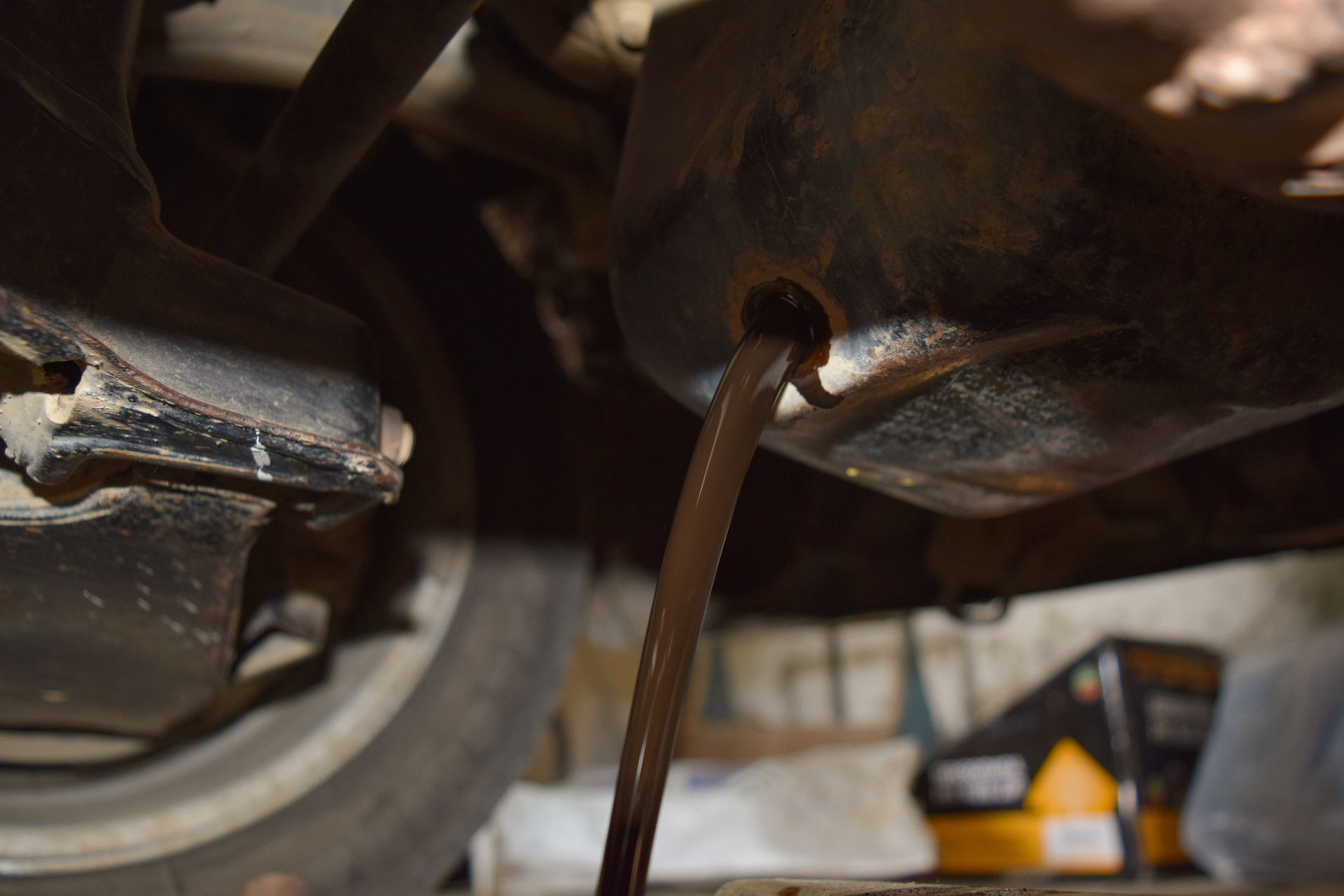
Differential oil protects those surfaces and carries heat away from the contact areas. As the fluid ages, microscopic metal particles from normal wear accumulate in it. Fresh fluid cannot reverse existing mechanical damage, but changing old lubricant before serious wear develops helps give the gears and bearings the protection they were designed to have.
Drivetrain Shudder Can Point Toward Transfer Case Trouble
One symptom we pay attention to on an xDrive BMW is shuddering or binding during low-speed turns or light acceleration. Drivers sometimes describe it as a hesitation, vibration, or feeling that the tires are skipping slightly when maneuvering through a parking lot.
Transfer case fluid condition may contribute, but it is not the only possibility. Tire differences, worn driveline components, transmission issues, and mechanical wear inside the transfer case can create similar symptoms. At our shop, we diagnose the cause before assuming a fluid service alone will correct an existing drivability problem.
Matching Tires Are Especially Important on xDrive
BMW xDrive depends on the wheels rotating at closely matched speeds. Large differences in tire diameter caused by mismatched tire sizes, uneven tread depth, or incorrect inflation can make the system work harder than necessary.
The transfer case can interpret those speed differences as wheel slip and continually adjust torque distribution. Over time, that extra activity can increase stress and heat inside the system. When we perform an inspection, tire size, tread depth, and condition are part of the drivetrain picture, not separate concerns.
Fluid Service Is Preventive, Not a Repair for Mechanical Damage
Changing transfer case or differential fluid is most useful before internal parts are badly worn. If a differential is already howling or a transfer case has developed severe binding, fresh fluid is unlikely to make damaged bearings or clutch components healthy again.
That is why we prefer to look at fluid service as regular maintenance rather than a cure for every xDrive complaint. When service history is unknown, we consider mileage, fluid condition, leaks, driving habits, and any existing symptoms before recommending the next step.
Leaks Can Lower Fluid Without Leaving a Large Puddle
Transfer cases and differentials use relatively small amounts of lubricant compared with an engine. A leak doesn't have to leave a huge spot on the driveway to matter.
Seals around axle shafts, driveshaft outputs, covers, plugs, and housing joints can begin seeping with age. Even a slow leak can eventually lower the fluid level enough to reduce lubrication. We look for fresh wetness and accumulated residue underneath the vehicle rather than waiting until the unit becomes noisy.
Use the Correct BMW-Specified Fluid
Transfer case and differential fluids are not interchangeable simply because they are all lubricants. The correct viscosity, friction characteristics, and specification depend on the particular BMW drivetrain.
Using the wrong fluid can affect lubrication and, in the transfer case, clutch operation. We identify the drivetrain and use the appropriate fluid rather than reaching for a universal product. On certain BMW applications, transfer case service can also involve resetting or recalibrating learned values with proper diagnostic equipment after the fluid is changed.
Service History Helps Determine When to Do It
There is no useful one-size-fits-all mileage number for every BMW xDrive model. Vehicle generation, drivetrain design, operating conditions, towing or heavy-load use, and previous service all influence what makes sense.
If you recently purchased a used xDrive BMW and there is no record of drivetrain fluid service, establishing a maintenance baseline can be worthwhile. The same applies to higher-mileage vehicles that have had careful engine and transmission maintenance but have never had the transfer case or differentials addressed.
Get BMW xDrive Drivetrain Service In Fairfax, VA, With Benz Elite Automotive
If your BMW xDrive has unknown transfer case or differential service history, has accumulated significant mileage, or has developed shuddering, binding, leaks, or drivetrain warnings, Benz Elite Automotive in Fairfax, VA, can evaluate the system and determine what service it actually needs.